Monday, 14 January 2013

2013 Afcon's interesting numbers


Strong presence. . . Mali's Adama Coulibaly is one of six players sharing his surname in the 2013 Afcon.

NOW that the squads for the 16 teams which will be doing business in the 2013 Orange Africa Cup of Nations have been finalised, it is proper that interesting facts about the squads be closely scrutinised.
The excitement is beginning to rise as the teams arrive this week ahead of the big kickoff on January 19, now just five days away.
Here are some of the facts that emerged from 23-man squads of each national team:
  • Like in the past editions, the South African, known as the Premier Soccer League, is providing the bulk of the players – 25. The breakdown is as follows: 1 in Ghana squad, 2 in Togo, 2 in Niger, 5 in Zambia and 15 in South African team, Bafana Bafana.
  • Ethiopia has the highest number of players drawn from the team’s own national league – 20. (Cote d’Ivoire has the least – 1, third choice keeper Ali Badra Sangare from Academie Ivoire.)
  • Africa has provided 7 coaches for the tournament; the highest number in many years. These are Gordon Igesund (South Africa), Rachid Taoussi (Morocco), Lucio Antunes (Cape Verde), James Kwesi Appiah (Ghana), Stephen Keshi (Nigeria), Sewnet Bishaw (Ethiopia), Sami Trabelsi (Tunisia)
  • France retains the title of providing the bulk of foreign coaches – 5, namely Claude Le Roy (DR Congo), Patrice Carteron (Mali), Herve Renard (Zambia), Didier Six (Togo), Sabrir Lamouchi (Cote d’Ivoire)
  • At 41, Lamouchi is the youngest coach at the tournament. The Lyon-born mentor is a former France international of Tunisian descent. Second youngest at 42 is Carteron
  • The club with the highest player representation is TP Mazembe from Lubumbashi, DR Congo – 10. The breakdown is as follows: 4 in Congo (keeper Robert Kidiaba, defender Jean Kasusula, midfielders Deo Kanda, Tresor Mputu, striker Patou Kabangu); 6 in Zambia (defenders Stopila Sunzu, Hichani Himonde, Francis Kasonde, midfielders Nathan Sinkala, Rainford Kalaba, striker Jonas Sakuwaha)
  • 6 – the surname with the highest representation, Coulibaly/Koulibaly. The breakdown is as follows: 4 in Mali and 2 in Burkina Faso. Traore is second best with 5 players in Mali team (1), Burkina Faso (2), Cote d’Ivoire (2). Interestingly, both surnames belong to Malian culture.
  • 13 – the number of times the African coaches have won the Afcon in its past 25 editions; better by just one than foreign coaches 
Another point of interest, though not quantified with figures, is that there are more players based in Africa who will be in action in this tournament. Nigeria for example has selected six, something which was unheard of about the Super Eagles more than a decade ago.
Let the games begin!

Wednesday, 9 January 2013

Bring back Dakar Rally to Africa


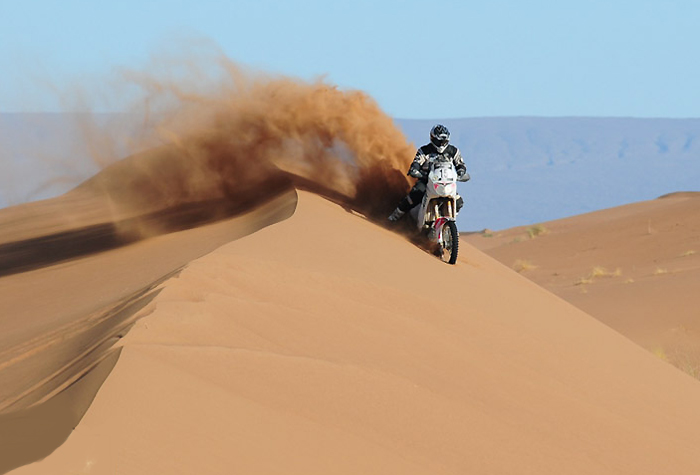
The real thing. . . Moroccan Harite Gabari rides the Sahara dunes in his country. Gabari is competing in this year's Dakar Rally, in South America. In the past Morocco was one of the Dakar hosts in Africa.
It’s a misnomer that the Dakar Rally is taking place in South America. Not because there is anything wrong with that part of the world, it’s a beautiful place judging by the TV footage of the event. My gripe is that it is the fifth year now that the Dakar Rally has been taken away from Africa, its original home, for security reasons and that the countries it traversed, as well as the African Union, have been silent.
I trawled the internet looking for statements I might have missed in the news, about Africa expressing the tragedy of losing this iconic motorsport  event, and maybe a promise of fixing all that took the event away. There was nothing. Quiet, like the Sahara, the spiritual home of the Dakar Rally.
 At this rate, it is adequate to conclude that as far as African leaders are concerned the biggest motor rally  is no longer the continent’s business. What are they saying in Senegal, whose capital gave the championship its name? It is still Dakar Rally after all, with the logo still depicting the head of a Touareg man, the desert nomad whose stomping ground used to provide the thrills and spins for the vehicles and motorbikes that compete in this rally.
There’s also a clumsy argument from certain quarters that Africa does not need this event as it is dominated by European drivers. This is backward thinking to say the least, given the fact that Africa loses out on the Dakar at the time international sport is multi-billion dollar industry with direct economic spinoffs experienced by host countries.
How troublesome was is it to the people of Algeria, Morocco, Mauratania, Mali and Senegal that the race used to go through their countries, a positive international exposure that is now being enjoyed by Peru, Argentina and Chile? When coming to this issue, the African leadership stands accused of throwing the bathwater with the baby.
Africa’s daily experience should not be about wars, famine or other forms of strife. The reinstatement of the Dakar Rally in Africa will go a long way to put down a solid statement that Africa is a place to be. But we need visionary leadership to clinch that deal. Wake up AU!

Harite Gabari

Friday, 4 January 2013

It’s now or never for South African football

Confederations Cup
Lonely. . . A soccer fan cuts a lonely figure at the Free State during the 2009 Fifa Confederations Cup. It can't get worse for the 2013 Afcon starting in two weeks' time.

EVEN after the Bafana Bafana squad was named earlier this week there is still no sense that the host nation for the 2013 Africa Cup of Nations is excited about the tournament. This adds to the gloomy picture about the slow ticket sales in South Africa, which begs the question: “Do South Africans really want to host the Afcon?”

The tournament starts in 16 days from today, and still, the tickets bought for the kickoff match in the 94 000-seater FNB Stadium are still below 50 000. Ticket sales for other matches on the opening weekend do not even deserve a mention at this stage. Two factors relevant to South African psyche can be used to explain this apparent lack of interest in the tournament in this country.

Firstly, the tickets could have been going slowly because people were more concerned about affording their commitments for the festive season. These included travelling to far off countryside for holidays with the people back home. Money is tight and this period of the year people need it to pay for both life’s pleasures and necessities, such as school fees and other financial commitments.

It can therefore be hoped that football fans will start buying tickets once they determine how much they would still have after early January expenses had been taken care of. But time is running out and this anticipated late surge for tickets will be possible only if the desire to buy the tickets is really there among the South Africans.

The interest may be further boosted by how Bafana turn out in the two home friendly matches against Norway on January 8 (Cape Town) and Algeria on January 12 (Orlando). Performances near what is expected at Afcon level could spark mass interest in the tickets. But that could be relevant only to matches involving South Africa. What about the rest?

That brings us to the second factor, which is South African public’s notorious disregard for things African. The attitude extends to soccer, where the local fraternity - from fans, to media and administrators  - hold African football in disdain. Locals do not follow the game on the continent as they  don’t see the importance of reporting on events affecting the African game, while Safa and PSL officials also do not think highly of developments on the continent.

For example, most football fans do not know that as recently as December Al Ahly of Cairo represented Africa in the Fifa Club World Cup in Japan. Even when the Egyptian giants were crowned African champions for the record seventh time in November, when they edged Esperance of Tunis in the final, in South Africa that weekend the focus was on local issues.

It is this inward looking that has stifled South Africa’s progress in African football. To ignore the game on the continent is folly because no international success by an African team – club or national – will be realized without the continent. A team must be champion here before it can shine elsewhere in the world.

 Unlike 1996, when big stars like Abedi Pele played in front of empty stadiums in places like Port Elizabeth, the tournament’s numbers this time could be rescued by the large African immigrant community living in the country. The travelling fans will also come to the rescue, and more are expected to travel than it was the case in Angola (2010) and Gabon/Equatorial Guinea (2012). Already Zambians are said to be showing more interest in the tickets than the host nation. This is not because they are defending champions but because Zambians always travel far to support Chipolopoplo and this time the trip will be shorter.

Nigerians are great travelers as well, and they also have big numbers already in all major cities of South Africa. Ghana ironically begin their campaign in Port Elizabeth, just as they did in 1996, when they attracted just 8 000 fans against Cote d’Ivoire. That proved to be the biggest crowd that city attracted in 1996 as all other matches were extremely poorly attended, notably Algeria v Burkina Faso on January 24, which was watched by 180 people in the EPRU Stadium.

The crowds were no better in other centres, Durban included. In fact one match that attracted the biggest crowd other than those involving SA was at the Free State Stadium, Bloemfontein, where 9 000 saw Zambia drew 0-0 with Algeria on January 14. It was still poor attendance, and locals did not seem to care if Zambian legends such as Kalusha Bwalya, Kenneth Malitoli, Johnson Bwalya and Dennis Lota were in action in their town.

Has this attitude changed over the years? We’ll see when the 2013 Afcon starts in two weeks. But gut feeling says nothing has changed. The verdict: SA is its own worst enemy in African football. If there’s going to be a change of attitude then this is the time; it’s now or never.


Sunday, 2 December 2012

Yes to England victory, and to NZ team spirit


Indispensable. . . the All Blacks engaging in their best war tool - team talk.

I  never toasted England’s victory in anything like I did on Saturday when the Roses defeated the All Blacks in a high voltage encounter that had Twickenham screaming from all sorts of emotions until the final whistle. I am happy for England because New Zealand’s unbeaten run was fast becoming a tag of invincibility, something the sport of rugby does not need for itself.
Apart from ending NZ’s unbeaten run that had gone through 20 matches undisturbed, England were huge on the night, awesome. I don’t know what they had for their pre-match meal but I never saw the England rugby team stand so tall, and yet so vigorous in its movements, whether in attack or defence.
I don’t wish to name anybody in their squad because it was a thorough team work they dished out on Saturday. So pumped up were England that they looked like they could win another match soon after the final whistle had gone at Twickenham.
Bravo England, bravo.
While I celebrate their fall, I was touched by the All Blacks for their team talk after shaking hands with their opponents following the final whistle. The New Zealand players had a quick onfield post-match talk, obviously to discuss where it went wrong for them in London. The players were so absorbed in the talk one had some understanding why the All Blacks are such fine sportsmen. They concluded their discussion by consoling those teammates who were still emotionally down from the loss, and then walked off the Twickenham pitch looking like the champions that they really are.
I wish South African sports teams, especially Bafana Bafana and the soccer teams in the local league, could emulate the example of the All Blacks. The football teams in SA are battling for positive resuIts internationally, and lack of maturity. Who would forget the dance of shame Bafana players performed in Mbombela Stadium in late 2011, thinking their lousy goalless draw with Sierra Leone was enough to qualify for 2012 Africa Cup of Nations.
Even if they had indeed qualified, it would have been a mature thing to have had a moment of reflection before they even thought of dancing. In fact, the second best thing after a quick post-match talk is to thank the fans for their support.
In victory or defeat, post-match team talk is crucial not only to bind the team together, but to highlight what went right or wrong so that a clear path is carved for battles lying ahead. Local soccer legend and former Bafana coach, Screamer Tshabalala, is on record saying the downfall of SA football, from club level to national teams, is lack of team talk in all areas of importance.
“In my playing days we talked after the coach was done with his training session; we talked the game in the bus heading to the match, and we talked about the game after the final whistle,” Tshabalala once said.  
     

Friday, 2 November 2012

SA faces test in Soweto Marathon


V for veteran. . . Johannes Kekana won the City to City marathon between Joburg and Cenurion, now he wants the Soweto title, despite his age. 

South Africa’s premier standard marathon (42.2km), the Soweto Marathon, is upon us again - on Sunday. And once again, South Africa’s prowess in marathon-running is under the spotlight, for valid reasons. Before unknown Michael Mazibuko won the men’s race last year, the title had been in the hands of visiting athletes, mainly from Lesotho.

At the age of 24 Mazibuko emerged at the right time for marathon running, albeit Kenya introduces international marathoners from the age of 20. His victory last year, which was totally unexpected, raised hopes for the country which in the past had produced some of the finest marathon runners in the world.

The Soweto Marathon used to be the stage where these great home brewed marathoners used to meet. I caught the tail end of that era when I was a sports reporter. Previews ahead of the Soweto race used to be like a boy’s walk through the candy market: plenty of goodies but difficult to make a choice. It was like that trying to write about the marathon 15 years ago; lots of contenders that you ended up dedicating a story to most of them – for weeks ahead of the race.
Just to take you down memory lane, in 1997, a year after I had started my career as a sports writer, the following were contenders for the Soweto Marathon title that year: Abel Mokibe, Zithulele Sinqe, Daniel Radebe and the crazy and yet talented Eric Mhlongo. There were other contenders whose names I can't recall now, and that’s how strong South Africa was in the marathon.     

This year there is high hope that Mazibuko could repeat his feat. And beyond him, there is talk about veterans Johannes Kekana and Gert Thys being contenders for the main title. I admire the two guys for what they have done for roadrunning, but winning the Soweto Marathon on Sunday is unlikely. Just to illustrate my point, Thys ran for SA in the Olympic Games in 1996. This is how far back one has to go to recollect Thys’ best years.

Kekana showed he still has that winning mentality when he won the City to City marathon in September. Now as far as my experience goes, well as a roadrunning writer, it is a big, big ask to pursue a marathon victory two months after competing to win another race, more so an ultra as the City to City is 50km-long. If Kekana were 24, I would hold thumbs up for him. But at 40, well it’s up to him to prove the sceptic in me wrong.
Here’s hoping that if Mazibuko does not do a double take, then hopefully someone new would come out of the woods of some corner of the country to clinch the title and its R100 000 first prize. Thanks to the big pay, the Lesotho and Zimbabwe guys would be coming down the mountains and crossing rivers, in their quest for the jackpot in Soweto.

Lesotho is in mean mood after Mazibuko’s interruption last year, when he beat Moeketsi Mosuhli to second place. Mosuhli and fellow countrymen, two-time winner Mabhutile Lebopo, Lebenya Nkoka and Teboho Sello (2007 winner) are some of the Lesotho men favoured to recapture the title on Sunday at Nasrec.
Not to be scoffed at is the challenge by the Zimbos, who often show more hunger for success in any race than other runners.

The absence of known strong contenders for the women’s race has virtually handed Lesotho’s Mmamorallo Tjoka the title – for the seventh time!
Here’s hoping the weather would play fair with the athletes and spectators, allowing for a memorable race day. I won’t be at the race this time, due to other commitments. Good luck to all, more so the SA runners!

Wednesday, 24 October 2012

Time to warm up to Africa


Joy for Bafana. . .  Happy scenes for South Africa fans might not amount to any significant success on the soccer field if the local football fraternity continues to isolate itself from the rest of the continent.

The leaders of African football are in South Africa for the 2013 Africa Cup of Nations draw later today. Under normal circumstances, the gathering in Durban by CAF and FA executives from across the continent should not look odd in one of Africa’s premier cities, if South Africa was not at odds with the fortunes of football in Africa.
The South African football public normally does not care about the events on the continent. I don’t have to go far back to cite the most recent example for my argument. This past weekend when in South Africa we were immersed in the affairs of domestic questions, this time via the Telkom Knockout, the focus of the rest of the continent was on the conclusion of CAF Champions League’ semifinal programme.
For the record, Esperance de Tunis and Al Ahly of Cairo qualified by overcoming spirited efforts by sub-Saharan opposition. Esperance, defending champions, beat recent champions TP Mazembe of DR Congo 1-0 at home to advance on a similar scoreline after aggregate. The two teams had played out a goalless draw in Lubumbashi two weeks earlier.
In the second semifinal last Sunday Ah Ahli overcome the odds placed on their championship run disruptions in the Egyptian league through a spate of public unrest – both political and criminal.  Egypt’s international striker Mohammd Nagui, otherwise known as “Geddo”, scored the only goal as the ‘Red Devils’  beat Sunshine Stars 4-3 on aggregate, following a 3-3 draw in the first leg in Nigeria.
These were the biggest stories this week as far as African soccer is concerned, but not in South Africa, where talking point was the defeat of Kaizer Chiefs at Bidvest Wits the previous Friday night. Support for  the local game is crucial for growth at all levels of football. But in South Africa we seem permanently blinded from all that is crucial about the game on the continent. Even the newspapers or radio sports shows last week and and on the weekend did not say anything about the business of qualifying for the final of the Champions League, the most prestigious club competition in Africa.
As a result, the soccer fraternity lacks respect for any good and progress that happens in African football. In South Africa the local league is seen as more important than the Champions League, even though the latter affords the winner the chance to rub shoulders with the best clubs in the world through the Fifa Club World Cup. TP Mazembe made the continent proud by reaching the final of the Fifa tournament, the first African team to do so, even though they lost to Inter Milan in the championship match.
Mazembe were not disgraced losing to Esperance in the Champions League semifinals last week. The club proved it has the pedigree to be counted among the best. Even remarkable is that TP has seven Zambian internationals in their books, a reality that has symbiotic benefits for both the club and their neighbouring country to the south, through international exposure.
While we know about the reputations of Esperance and Al Ahli, as well as the superlative technical ability of the rest of north African football which has made them virtual perennial champions of African club football, how does one explain the rise of Sunshine Stars? In recent years the Nigerian club has risen from the dust of  Akure city to be counted among the best in African football. Like in their debut season in the Champions League, Sunshine last year also reached the last four of the CAF Confederation Cup. A closer inspection of the club’s circumstances in their location in southwestern Nigeria reveals that most PSL clubs in South Africa are privileged. And yet by comparison, they are underachievers. Our clubshabitually struggle to cope with the conditions on the continent because mentally and spiriatually they are always ill-prepared for what is awaiting them when they travel. 
SA football - from the players,  officials, media and fans – needs to make an introspection on our relationship with the rest of the continent. The reason why are we dismissive or ignorant to developments in Africa, explains why we are underachieving despite our better access to resources.
Here’s hoping the Afcon draw tonight, and the tournament early next year will help change attitudes in South Africa. We need to hear soccer lovers debate about African football and the media writing and talking a lot more about the CAF Champions League.  How do we expect to meet the likes of Chelsea or Barcelona or Brazil’s Santos in  official matches if we are not going to win the Champions League?
Meanwhile, I am crossing my fingers that Bafana Bafana do not draw Nigeria in their group tonight. Even at its worst periods, the Super Eagles often have the extra wing against South Africa. I think it is their mental strength that does the trick. SA players are notorious for not researching anything about their opponents. So, in the mental warfare, it is easy for the likes of Nigeria to be superior.
The bottomline is that to conquer Africa, is to know Africa. As long as we keep our distance, the prospects of winning anything - at both club and nation level - are non-existent.

Thursday, 11 October 2012

Difference between Meyer and Igesund

You have a chance. . . this is the message new Bafana Bafana coach Gordon Igesund has been preaching to South African players where they are in the world.

Two of South Africa’s major sports are managed by two new coaches – Heyneke Meyer for rugby’s Springboks and Gordon Igesund for soccer’s Bafana Bafana. But being new in their jobs, and the fact that both got the hot seat after being overlooked in the past, about sums all that is common between the two coaches.
It is incredible that while Igesund is generally seen to be Bafana Bafana’s saviour by the football fraternity, after years of underperforming by the team, Meyer carries himself as Sprinboks’ messiah. He was however brought down to earth with a thud in his first championship in charge – the recently ended Castle Rugby Championship.
Arrogance in team selection proved to be Meyer’s Achilles heel. The resounding victory over a disjointed Australia at Pretoria’s Loftus Versfeld was about the only highlight in the series for SA, whose game was blighted by poor spot kicking.
Granted, the Boks outplayed the All Blacks in New Zealand midway the competition. But the record books will show that SA lost, thanks to erratic kicking by an out of form Morne Steyn. Meyer had seen enough of Steyn’s poor form in the earlier matches but chose blind faith to logic to select Steyn again at No.10 in Dunedin on September 15.
Though it was clear to the local game’s followers that the onform and regular match-winner from the flyhalf position was Elton Jantjies of the Lions, Meyer contrived to pick Johan Goosen. Not a bad a choice given the Cheetahs youngster’s potential. Timing was all that was wrong about this move by Meyer. Goosen at the time had missed most of Currie Cup action through injury. At the time of his selection Goosen had been match-fit for a few days.
Needless to say he was overwhelmed in Dunedin, coming in with 25 minutes to go. The unspoken message for the 20 year old was that he had to repair the damage Morne Steyn had already done earlier. He missed with his first attempt at goal, but scored with a 45-minute kick later. Goosen was clearly never to feature again as the All Black turned on their trademark late surge.
You would think Meyer would recognize his error, but hell no. He defended his howler with one of the flimsiest excuses by a coach in international sport in recent times. His post-match comment, once again, exposed blind faith:
“I’ve always rated Johan Goosen. I watched him play as a youngster and it is a pity he got injured (before the Castle series) because he was always part of my plans.”
Meyer also added “but I don’t want to throw him to the wolves. . .  he is a guy with a lot of character and mental toughness”.
That mental strength fell into pieces when he started against the Aussies a week later; it was clear Goosen had been thrown into the lions, despite earlier assurance by Meyer. Though Jantjies, who was selected after Steyn was finally dropped, was in the squad, his long-awaited Bok debut came in the dying minutes of the game and had no opportunity to show his worth.
Goosen started again at Loftus in the last match, against NZ, and his run was over in just 34 minutes when Jantjies was introduced. As was the case in Dunedin, this replacement also served to desperately try to fix the problem everybody knew of – except for Meyer of course.
By contrast, Gordon’s message on arrival in the Bafana camp was that no one was guaranteed a place in the national team. And that hard-working players with high technical standards, work rate and right attitude would be considered.
In his first two games in charge, Igesund recalled keeper Moneeb Josephs from “retirement”. The move was inspired as first choice keeper Itumeleng Khune returned brilliant stats in the game against Brazil, which SA lost 1-0, but on the back of a competitive and brave showing.
 Before this, Khune and some prima donnas during Pitso Mosimane’s tenure were almost guaranteed places in the national team, whether they worked hard or not. General ill-discipline ran through the team, with no real action being taken to remedy the situation. Even worse, good players were forced to seek employment with the big clubs in order to get the nod in the national set-up.
In his first two matches Igesund, including a 2-0 victory over Mozambique, Igesund showed he was not going to tolerate arrogance, and that he was not going to protect any player against the form book. For the match against Poland in Warsaw tomorrow there are players such as defender Thabo Nthete. In the recent past the Bloemfontein Celtic skipper would not have anticipated such gracious recognition of his skills as a defender and as a natural born leader of men on the field.
While there’s gloom overriding the rugby fraternity over the Boks showing in the Castle series, there is excitement all round about how Igesund approaches his work in Bafana. Some people are questioning why certain players are not in the squad, more so Teko Modise and Andile Jali.
Personally I feel the squad is better off without the last two. If I had to pick a player to beef up this squad, I would go for Black Leopards captain and attack-minded midfielder Mongezi Bobe. But again, the coach knows better.
Good luck Gordon and Bafana in Poland.    

Broos Has Set the Standard for Bafana's Future

The better-known talking point ahead of Bafana Bafana's opening 2026 World Cup match against Mexico on Thursday, June 11, is that it mi...