Horror story for Africa in Brazil continues


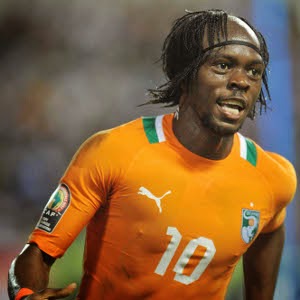
Rare joy. . . Gervinho scored the consolation goal as Ivory Coast lost 2-1 to Colombia on Thursday.

The African teams at the 2014 World Cup in Brazil have had a torrid first round, resulting with one of them, Cameroon, getting knocked out after the second wave of matches in Group A.

A horribly ill-disciplined and disjointed Cameroon lost 4-0 to a determined Croatia on Wednesday night. The central Africans had lost their opening match 1-0 to Japan, which means they are without points or goals ahead of their last match against Brazil on June 23 in Brasilia.

West Africans Ghana and Nigeria also had jittery starts, with Nigeria looking amateurish when drawing 0-0 against outsiders Iran. The Super Eagles have a such to redeem themselves in their remaining two matches. Ghana lost their opener, though their overall showing was far more decent. There's also hope, despite obvious heavy odds against the African teams.

Algeria also lost their opener to tournament's darkhorses Belgium, who came from behind to snatch a late victory from their substitutes. Ivory Coast were the only team from the continent to start with a victory, 2-1 over a determined Japan. Last night the Elephants fell 2-1 to Colombia but their cause to advance out of  Group C was strengthened by Greece and Japan cancelling each other out playing to a 0-0 draw.

Despite the overall poor start by Africa, the five teams which went to Brazil remain the best representation from the continent. I cannot think of another African country which could be said was unlucky not to qualify for Brazil 2014. The shortcomings of the five teams which are there -  including howlers such as Ghana letting in a 32 second goal against the US and Cameroonian players clashing onfield - represent everything that is wrong about African football. These shortcomings range from tactical errors, poor approach and general poor discipline which has kept the progress of African football on hold for many years now.
Africa still has a long way to go to provide meaningful challenge at the world cup.

The appointment of foreign coaches with no known achievement, such as Germany's Volker Finke of Cameroon, is not helping our cause on the continent. But the biggest contribution to change lies with attitude of the players; professionalism cannot be substituted at this level. My wish is that African players dump their crazy hairstyles and adopt a more mean look and approach to the game. I wish our players save their elaborate dance routines after scoring goals to the end of the match. At that time they have every right to celebrate a good outing.

Similarly, the national federations in Africa must start playing ball. The mayhem that preceded Cameroon's departure for Brazil often repeats itself around the continent as national associations' executives play hard ball when it is time to reward the players. You wonder why there are no cash problems when these executives book themselves five star trips to venues of international competition, such as the World Cup or Olympic Games.

Comments

Popular posts from this blog

Rest in peace Zet, thanks for the good times

Legends. . . Zithulele Sinqe runs ahead of another roadrunning super star Willie Mtolo in 1986 Each time when I drive past ERPM in Boksburg, along Rondebult Road, one name springs to mind: Ernest Seleke. The association comes from the memory of Seleke running in a vest with ERPM emblazoned across the chest area. Back then, in the 1980s, I did not even know that ERPM was an abbreviation for a mine, and that the initials stood for East Rand Propriety Mine. To me ERPM was Seleke, not the gold mine it actually was. Stock, as the lithe running machine was known, was a marvel to watch on TV during that time of my schooldays. However, he was not alone among the crop of SA runners who were nurtured and sponsored by the mines to excel in their sport – both on track and on the road – at that time. There were many products of the mines and parastatals but I can immediately single out Xolile Yawa, Matthew Temane, Gibeon Moshaba, Matthew Batswadi, Ben Choeu and much later Zithulele Sin...

Nigerians pay the price for ignoring their own league

Earlier this year, Nigerian media, commentators, and football followers erupted in outrage following the March 25 World Cup qualifier in Uyo, where the Super Eagles were held to a 1-1 draw by Zimbabwe. On paper, it should have been an easy assignment. Nigeria’s squad, stacked with stars from Europe’s top leagues, was expected to sweep aside a Zimbabwean side traditionally considered lightweight. Yet the Warriors who arrived in Uyo were far from the Zimbabwe of old. The southern Africans had undergone a quiet transformation, with several players now plying their trade in big European leagues. Zimbabwe has also borrowed from West Africans by pursuing diaspora kids for its national team. The outpouring of anger in Nigeria was not surprising, given the country’s unmatched passion for football. But in hindsight, the fury was misplaced. The ongoing African Nations Championship (CHAN), currently being staged in East Africa, has brutally exposed where Nigeria’s real weakness lies. Unlike the ...

Ambitious Pyramids rank as Pirates' most important foe so far this CAF season

For decades, the Egyptian league had been dominated by Cairo giants Al Ahly and Zamalek football clubs, with some limited challenge offered by Ismaily and Arab Contractors. Both Ismaily and Arab Contractors had significantly receded in the past decade, with the Contractors (now preferring to be known as Al Mokawloon Al Arab) losing their premier league status as they currently campaign in the Egyptian second-tier. Despite their fallen fortunes, the Contractors and Ismaily remain among five other clubs to win the Egyptian league apart from Al Ahly and Zamalek. Amid these events Pyramids FC emerged in 2018 to forcefully stake a claim in the top 3 of the Egyptian league. The club was in fact formed in 2008 as Al Assiouty Sport in Beni Suef, a city 120km south of Cairo. In 2018, a season after the club had returned to premier for its second stint, it was bought by the chairman of the Saudi Sports Authority Turki Al-Sheikh, renamed Pyramids and relocated to New Cairo, a modern metropolit...